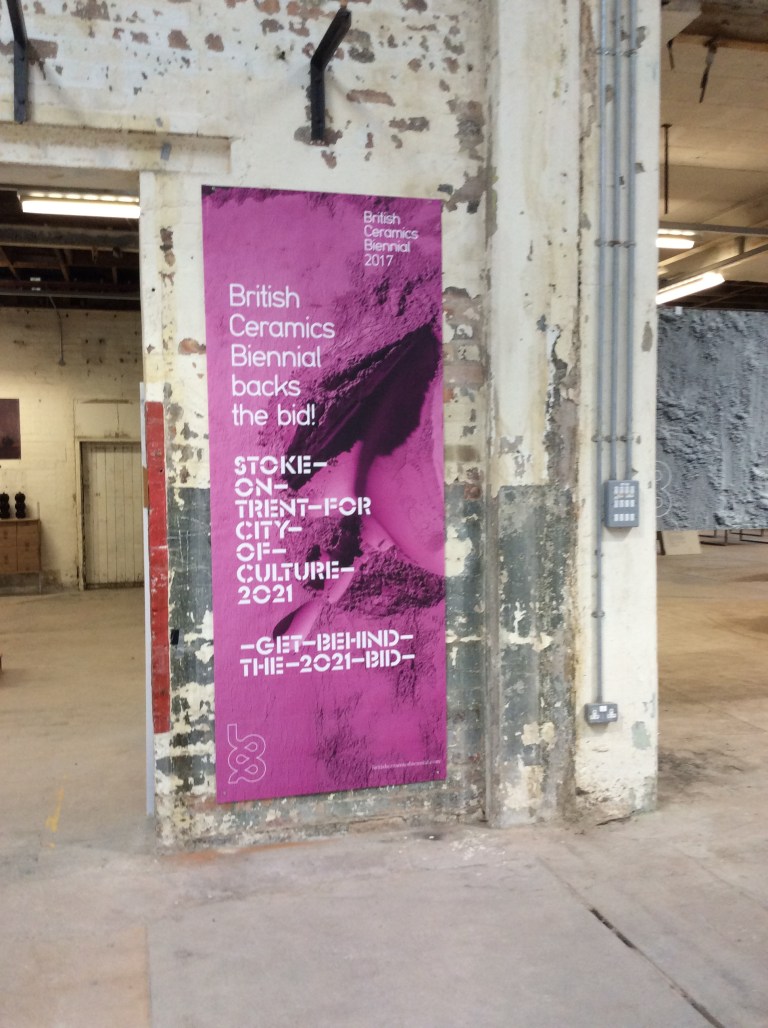
I took the train to Stoke, which was a 1 hour and 45 minute journey from Banbury. The Ceramics Biennial is described as the Nation’s biggest festival of contemporary ceramics. It takes place all over the City, which turns out to be quite spaced out, as there were 9 different venues, a lot of it in different Potteries. The potteries tend to be situated on canals (for distribution of goods) and out of the center of Town. There was no advertisements or any information about the Ceramics at the station, in fact nothing in the Town about it at all.
Because I’d looked on the website, I went first to the Spode Factory, which was near the station. It looked pretty deserted but there was a shop open with building work going on. I went in because I am interested in patterns on china and I hoped they might have some pattern books.
I found out that one venue for the Ceramics Biennial was in one of the empty buildings on site. It was in a huge empty warehouse. Again, no advertising outside or any instructions to get in there ! Once inside, it was an enormous venue with lots of interesting works.
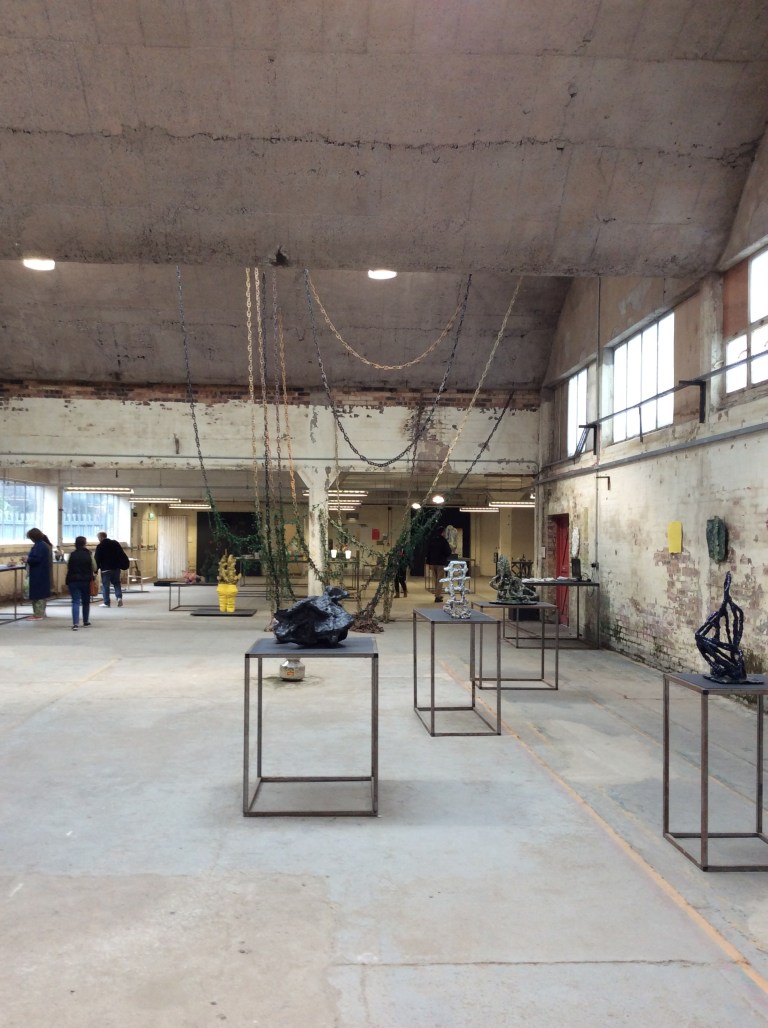
The standard was high. Clay is an amazingly diverse medium, you can make so many different things with it in so many different ways.
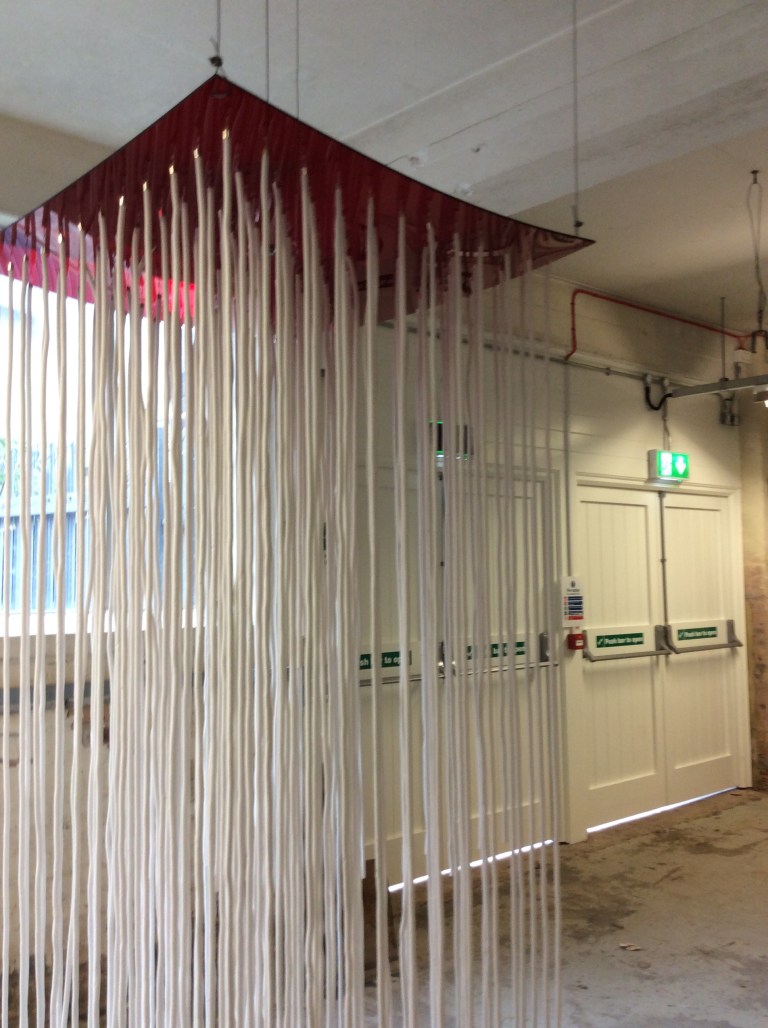
Like a shower!
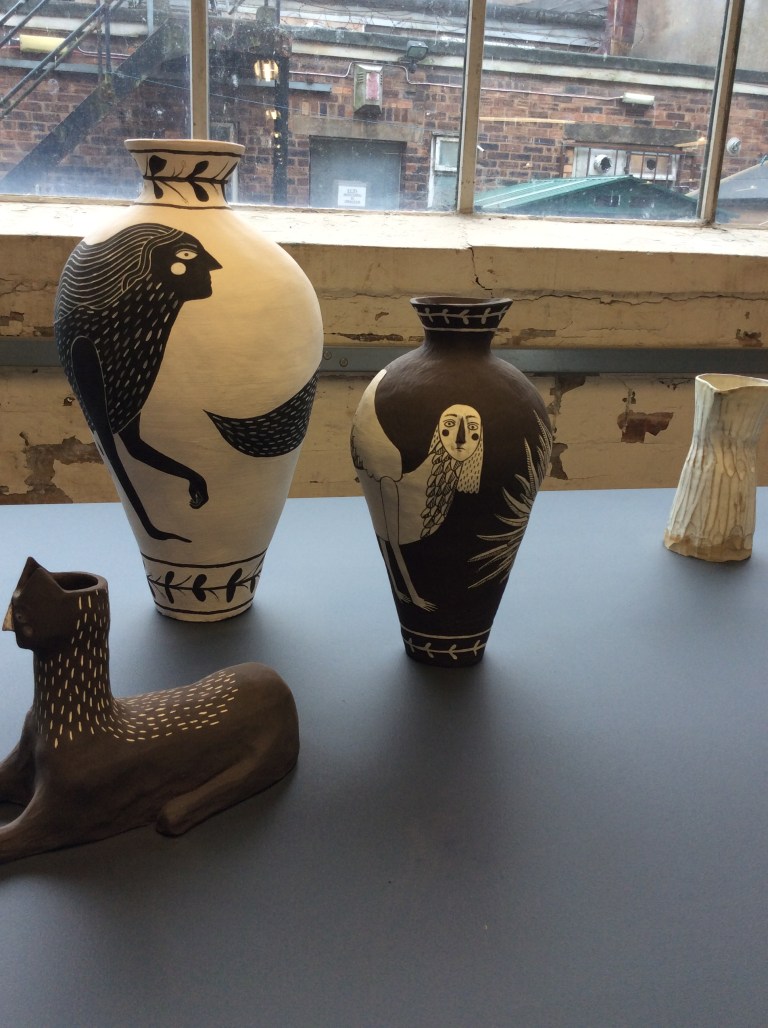

Life sized!

Above, more than life sized! Where do they find a kiln for this?
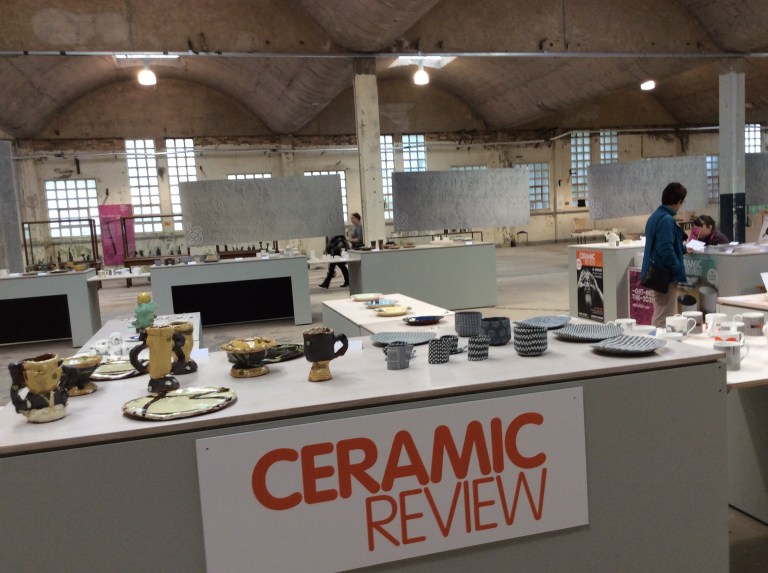
The shop
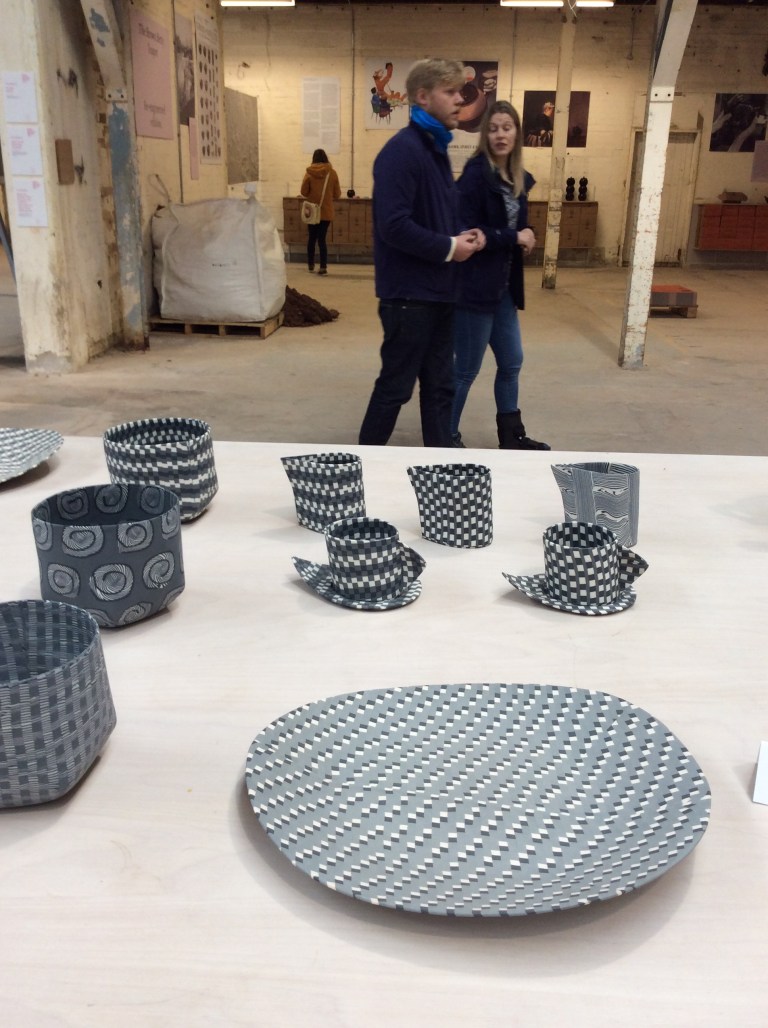
Really a wonderful show. A huge space with many many pieces to see. So many that I couldn’t photograph it all. The range was vast, from domestic thrown pieces to the ones below

These pieces were described as’ intermediary forms’ in other words they had not been fired. The Title is Embodied Matter, by Neil Brownsword and Oh Hyangjong (Onggi trained South Korean potter). These forms were described as occupying the territory between raw geology and the crafted object. This was a crosscultural project and couldn’t be more different from what the potteries of Stoke used to produce. It illustrates how the Town of Stoke and indeed modern British ceramics has embraced the future.
There is a tremendous history about the Potteries in Stoke and the production of china, and as I was there, I felt I must see one of the Potteries, because the bottle kilns always look so beautiful. I was told that Middleport was the best preserved and where the Great Pottery Throwdown was filmed. It has been funded by the Historic Buildings Trust and Prince Charles is a founding Patron. It is a working Victorian factory. There are also working potters there. It was a fairly long journey by taxi to get there.
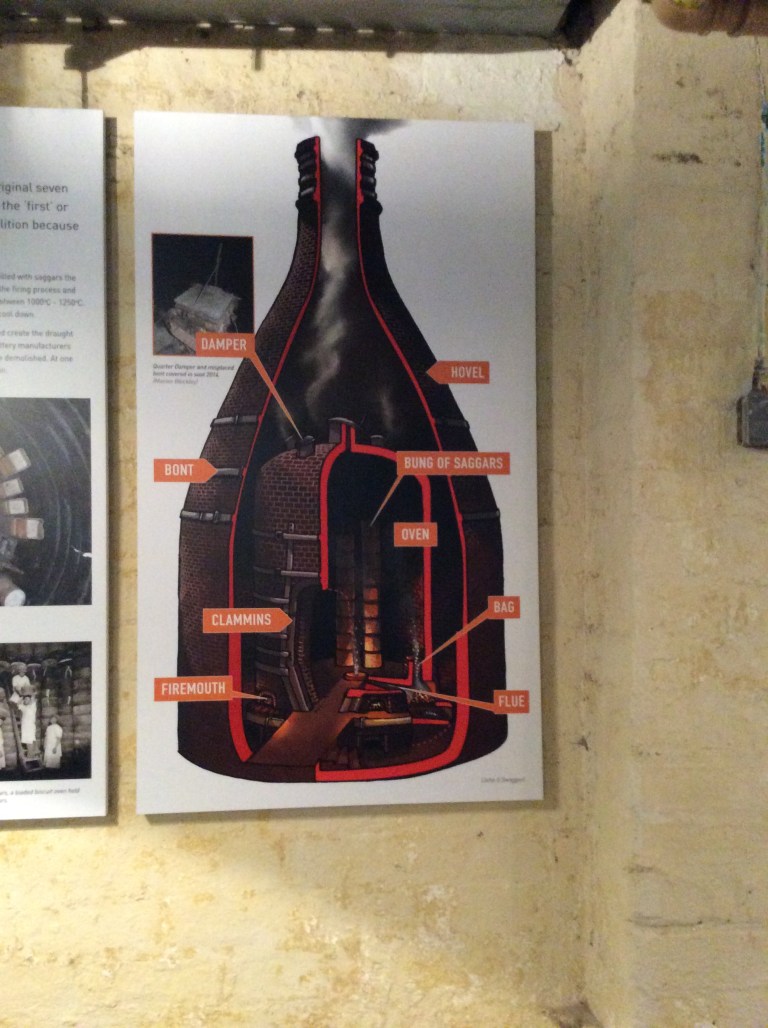 Middleport Pottery, picture of a Bottle Kiln and how it worked. Sadly very few of these left now.
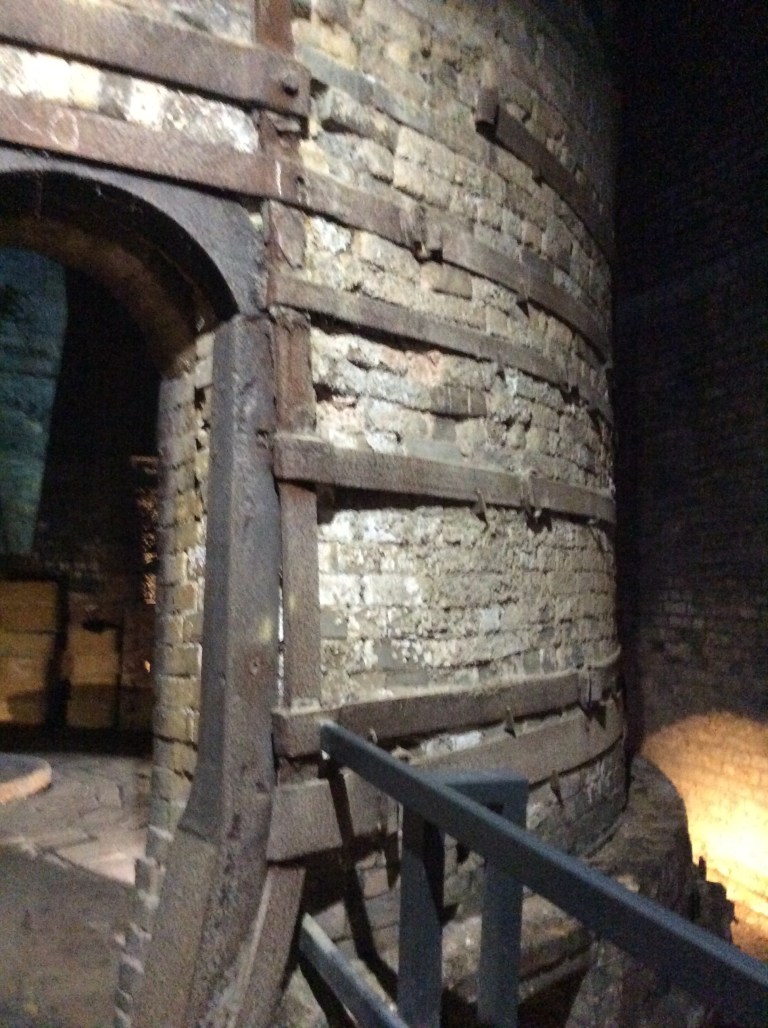 This one is inside the factory at Middleport.
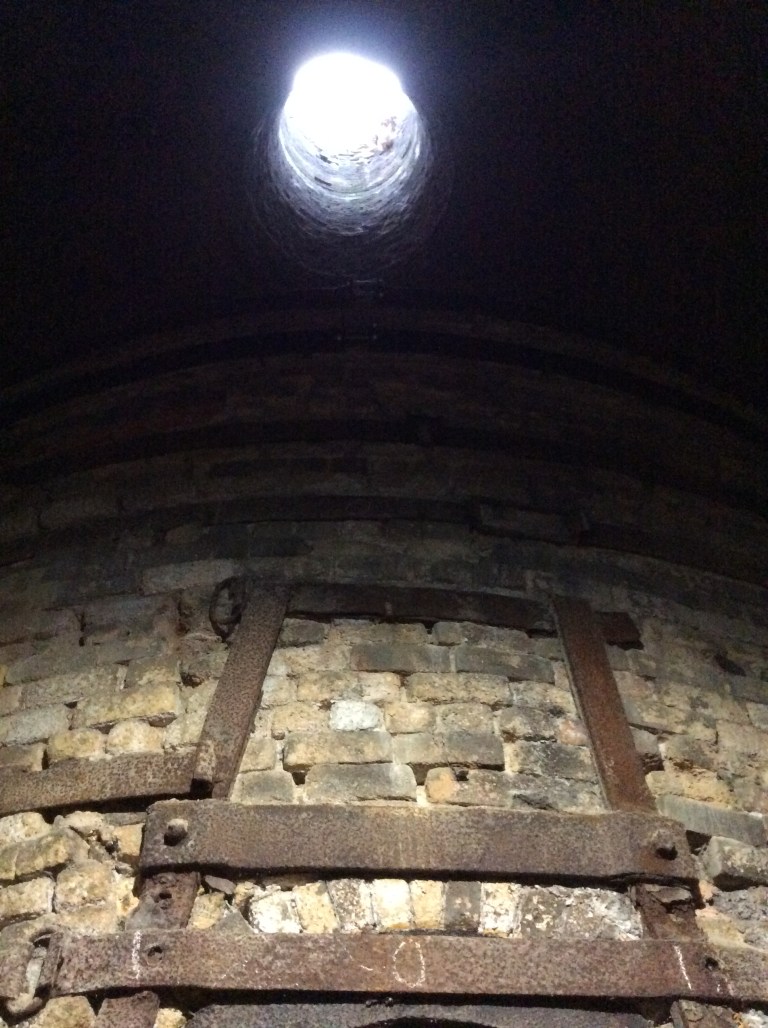 This is taken from inside the kiln looking up at the bottle neck.
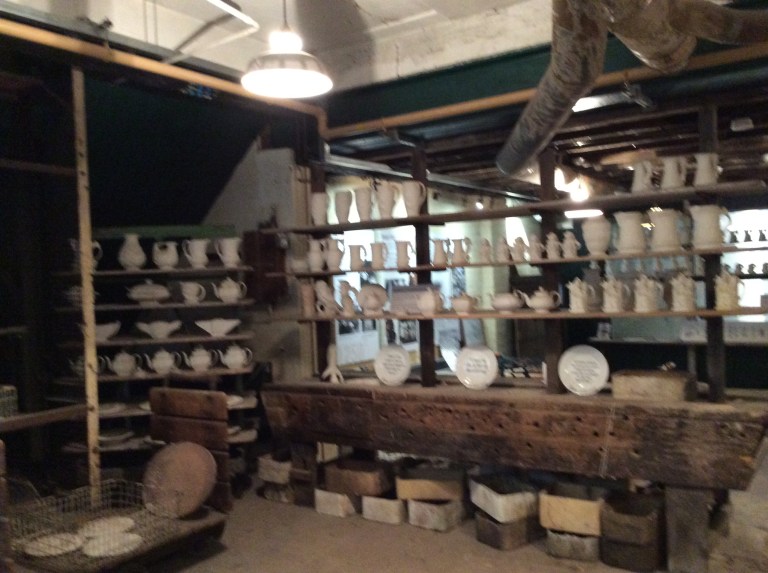
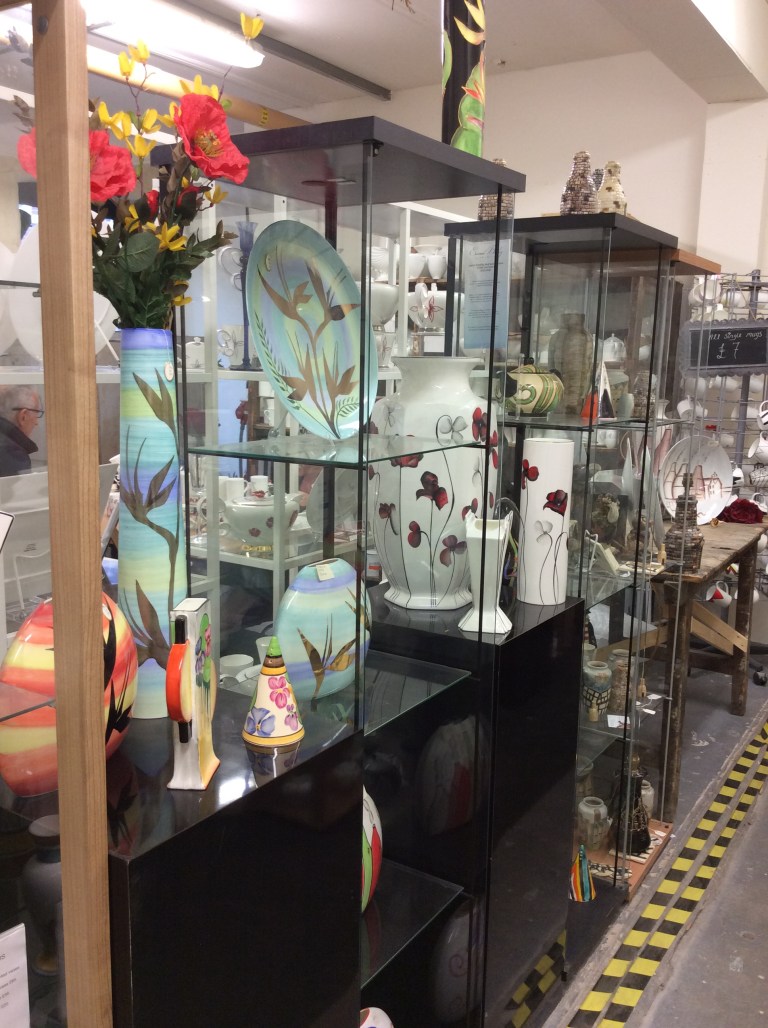 Shop inside the factory there are many working china shops.
I enjoyed my visit, but afterwards I did wonder whether I should have visited the Wedgewood factory at Barlaston, but that would have been further. I only really had time to visit one factory. There is also the Emma Bridgewater factory – a working modern factory which you can go round, and of course it is selling its chinaware in shops all over the Country. I really admire her for doing this and keeping the old crafts going. She is employing 300 people. It is the only factory left which is working as a going concern.
All in all, there is a lot to see in Stoke and I found it a very friendly Town. Really it might have been better to visit for 2 days. I did feel that they could have made more of the ceramic Biennale though. There was little or no advertising anywhere and even the Taxi Drivers didnt seem to know about it, I felt there should have been many more visitors considering this is the 5th time they have held it. The Biennale itself was fascinating and exhibited such diverse works – definitely worth a visit.
 anita21718