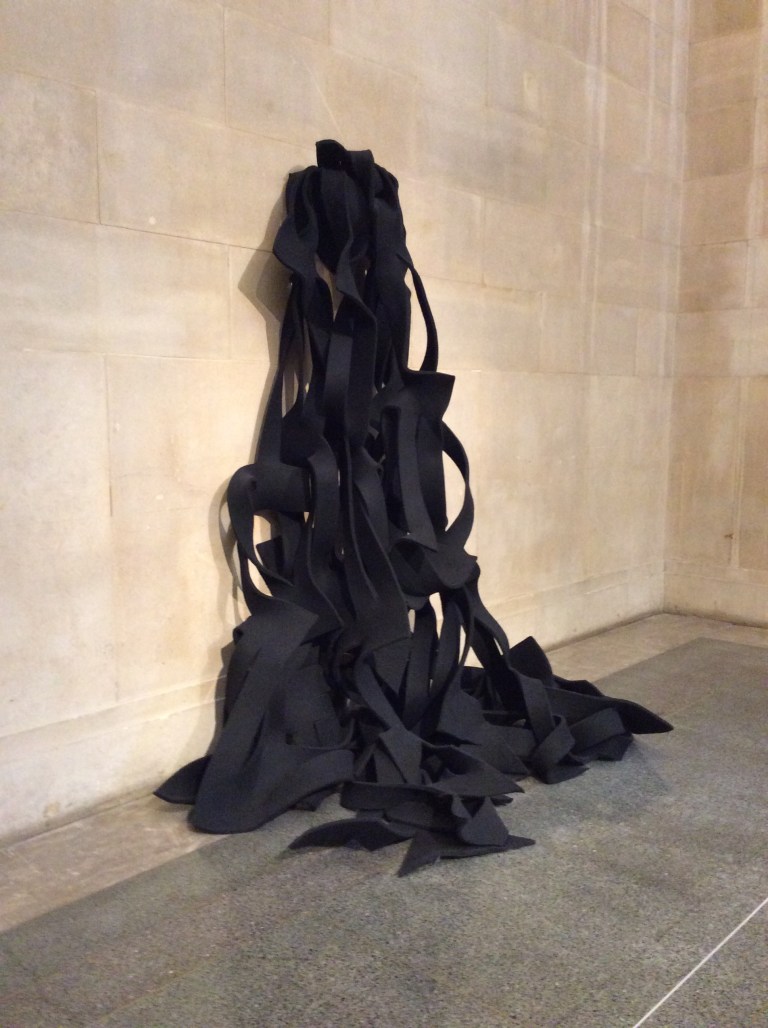
I was very struck by this piece in the Tate by Robert Morris. It is called ‘Untitled’ and is made of felt. It was made in 1968/9, and remade in 2008. Robert Morris was interested in spontaneity and in this sculpture, he has first cut the felt, then has draped, stacked and hung it to get his effect. He also wanted to make a point about the ephemeral nature of art, by changing how the felt is hung each time it is installed. Hence the ‘remade’ on the description at Tate Britain.
I decided to base my final piece on it. My aim was to explore the subject of Minimalism, and the nature of the Robert Morris Felt Pieces in particular. That means what he wanted to achieve ie spontaneity, and the feeling of gravity through the medium of felt, but I wanted to try to do it using other mediums such as ceramics, photograms, screen prints and 3D plastic. The results are different from those of Robert Morris, as they are different mediums, but I hope interesting nevertheless. I also researched Robert Morris and Minimalism by visiting exhibitions, using books and the internet.

Robert Morris, ‘Fountain’, 1968, Felt.
By chance there was a marvelous exhibition of Minimalism called ‘Crossroads’ at the Spruth Magers Gallery in London.
It gave me the chance to see another of Morris’ felt sculptures, as most of his work is in America. This felt sculpture is totally different from the one above in that it is carefully arranged in a controlled manner into one exquisite but austere shape called ‘Fountain’. It is not spontaneous although the subject matter – a fountain – is.
Initially, I hadn’t thought about water, but as I carried on with my project, I did.
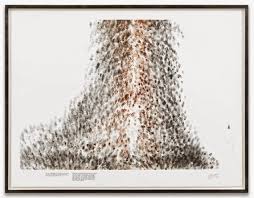

Two untitled drawings by Robert Morris – falling water, and the ocean maybe.
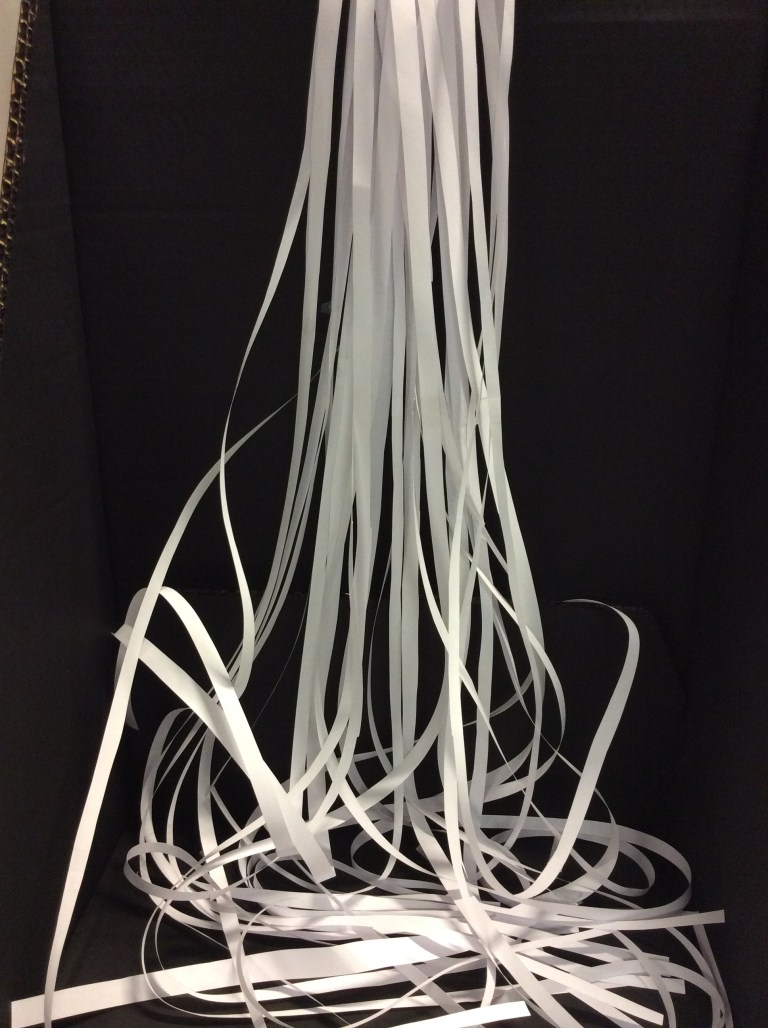
I made this Maquette using an old box which I painted with black Gesso and cut strips of paper which I glued to the back. Initially it was not about flowing water. But the long strips of paper which wind back on themselves, convey movement frothing and splashing.
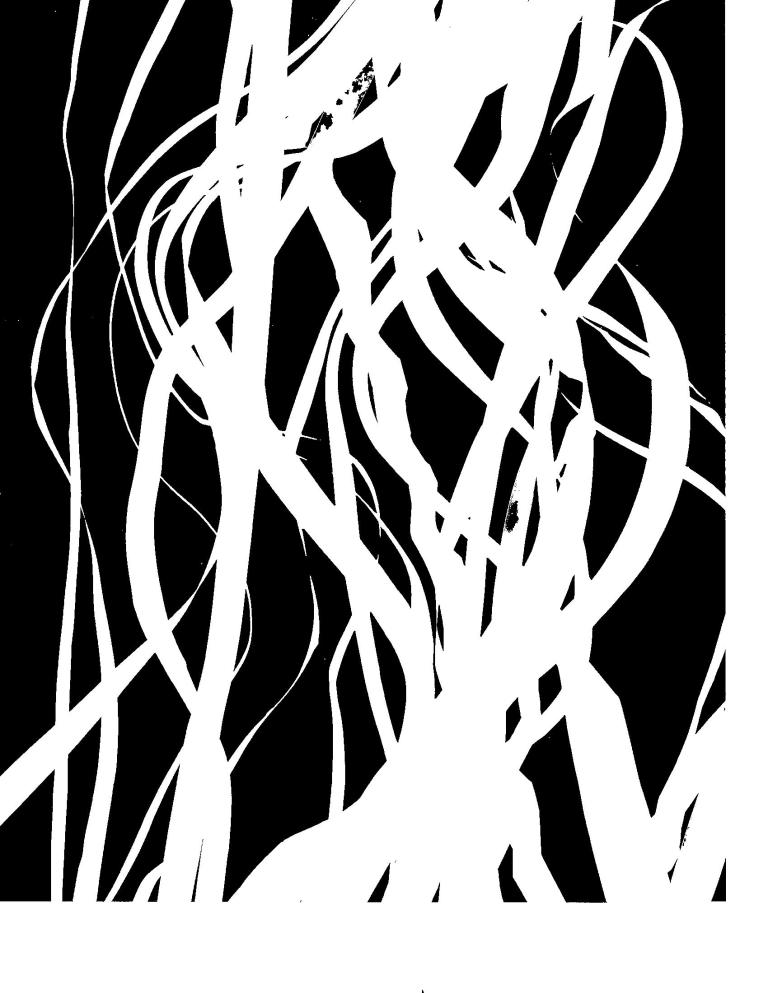
I made some Photogrames using paper strips and exposing them on light sensitive paper, this is one example. I was trying to capture movement. I began to think of water, running water or falling water. But it must be an abstraction, I did not want to make it realistic, merely symbolic. It is also interesting that I have evolved from a negative ie black felt to white strips. Water is reflective and therefore white.
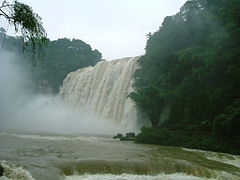
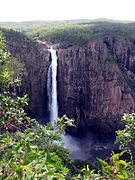
I looked at waterfalls on line and visited one.
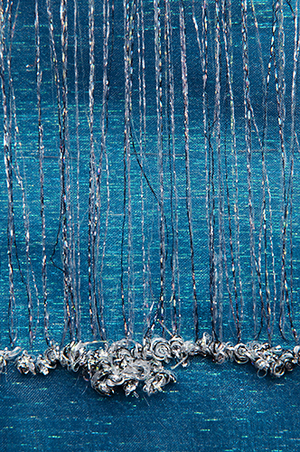
I very much liked this idea by Carol Westfall in her ‘Cascade’ Series. She is a mixed media American artist this is made from synthetic fabric and thread.
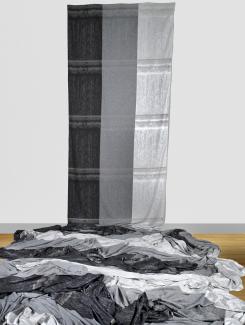
Waterfall by Carol D Westfall. This is a large plastic construction.
I experimented with silk screen, and the Vacuum sealer also, but neither was successful to my mind.
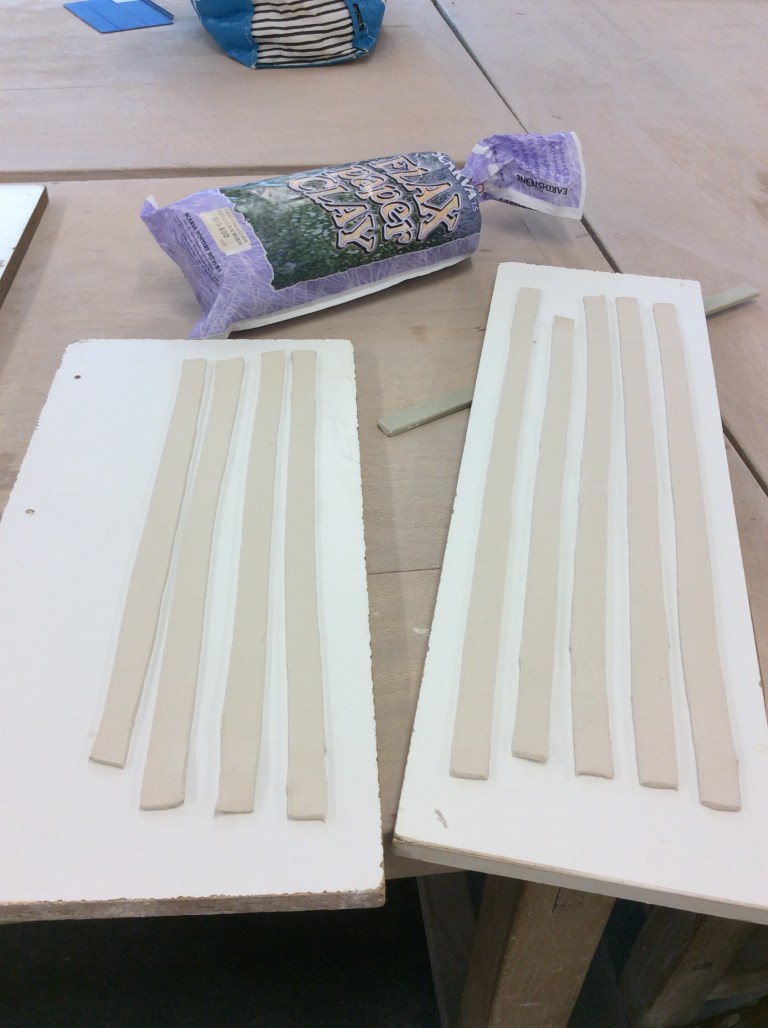
Ceramics. The porcelain pieces laid out to dry after having been in the slab roller.
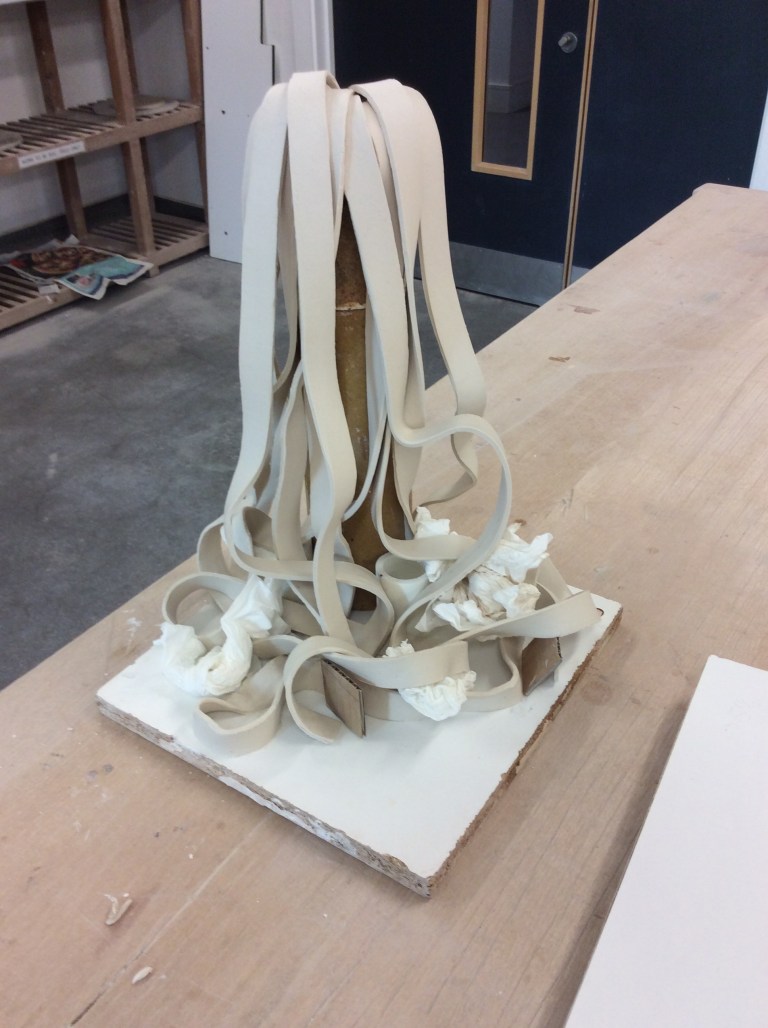
The dried porcelain, which has been bent into shape before going in the kiln for firing. It is important that it dries as it needs to hold its shape while being put into the kiln, a very delicate operation.
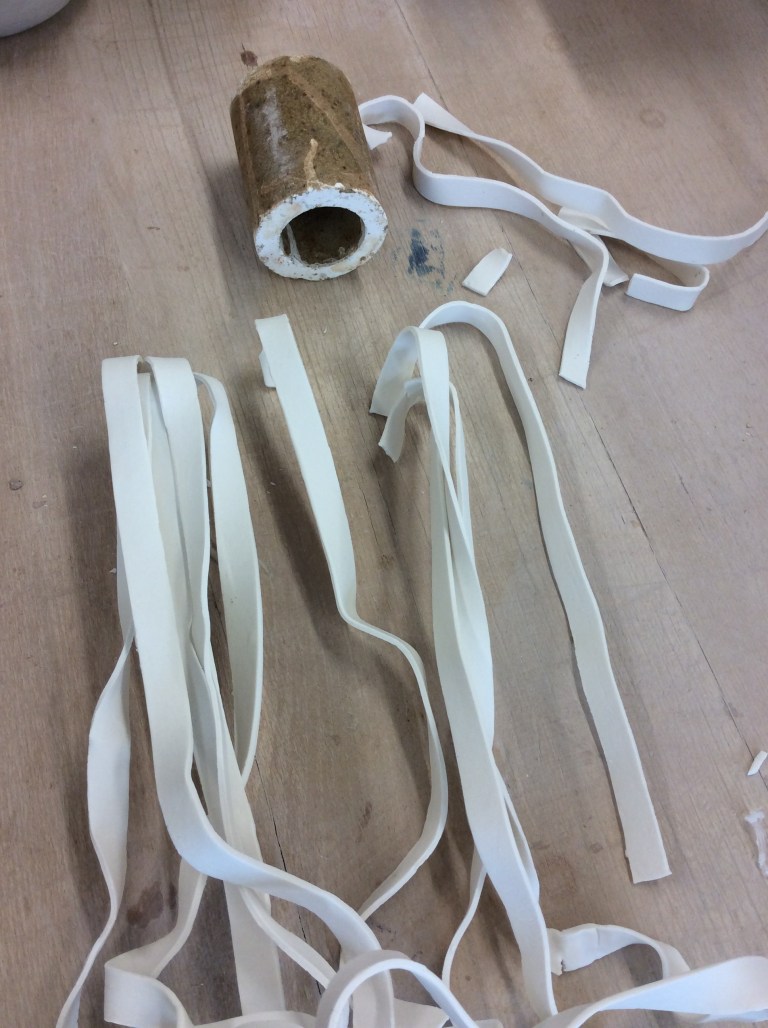
The porcelain after firing. some of the pieces broke because they are so delicate and brittle.
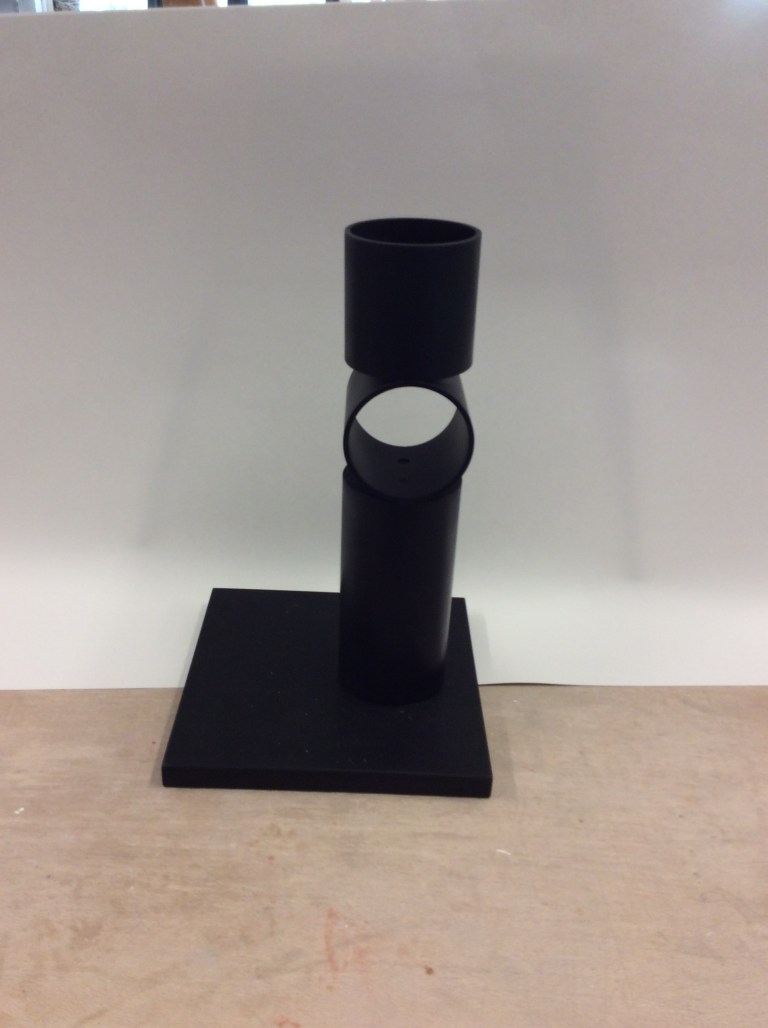
I devised a stand to exhibit the ceramic on. I wanted to keep a minimalist feel, and felt that a porcelain stand would have been too heavy for the piece. I did not want it to be too realistic or in any way like nature or rocks.
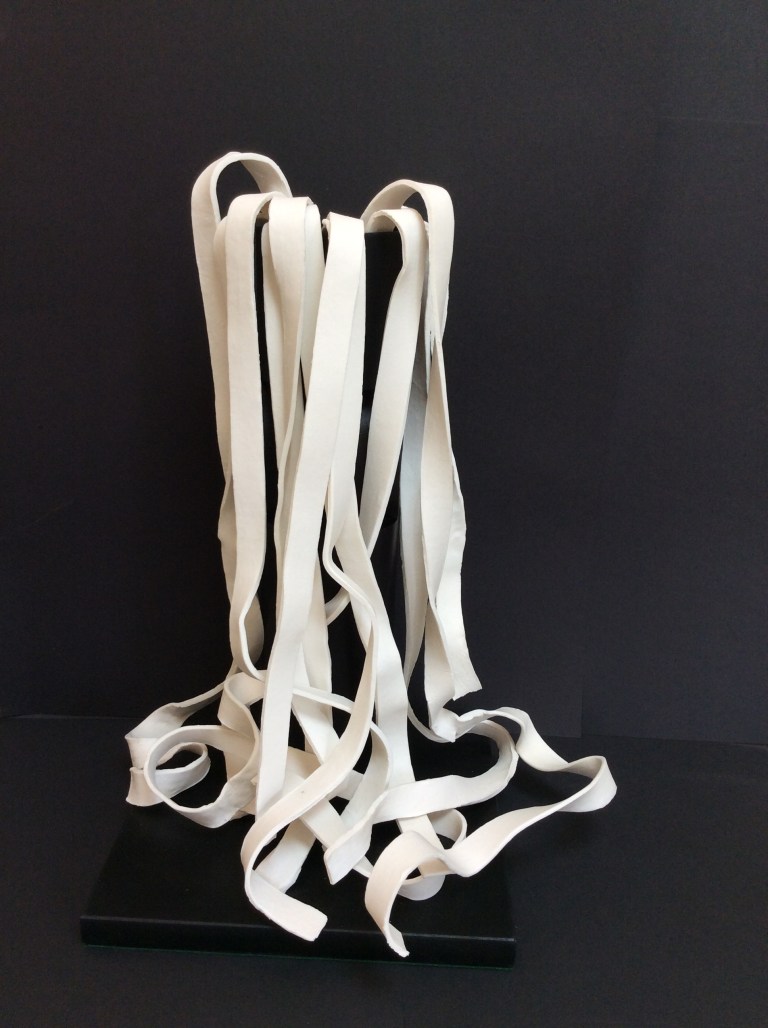
The Shape of Water.
The finished piece on the stand. I wanted to capture the impression of falling water through the shapes of the long strips of porcelain. Being made of porcelain the structure is rigid, or static, which a waterfall in the wild is not, but that is not important any more than it would in a drawing or painting. I have called it The Shape of Water (not because of the recent film) but because the abstract shape of water is what I intended. The white strips of porcelain reflect the light. It is a Cataract rather than a cascade, because a cataract is a large waterfall, rather than a cascade which runs over rocks. The water falls from a height.
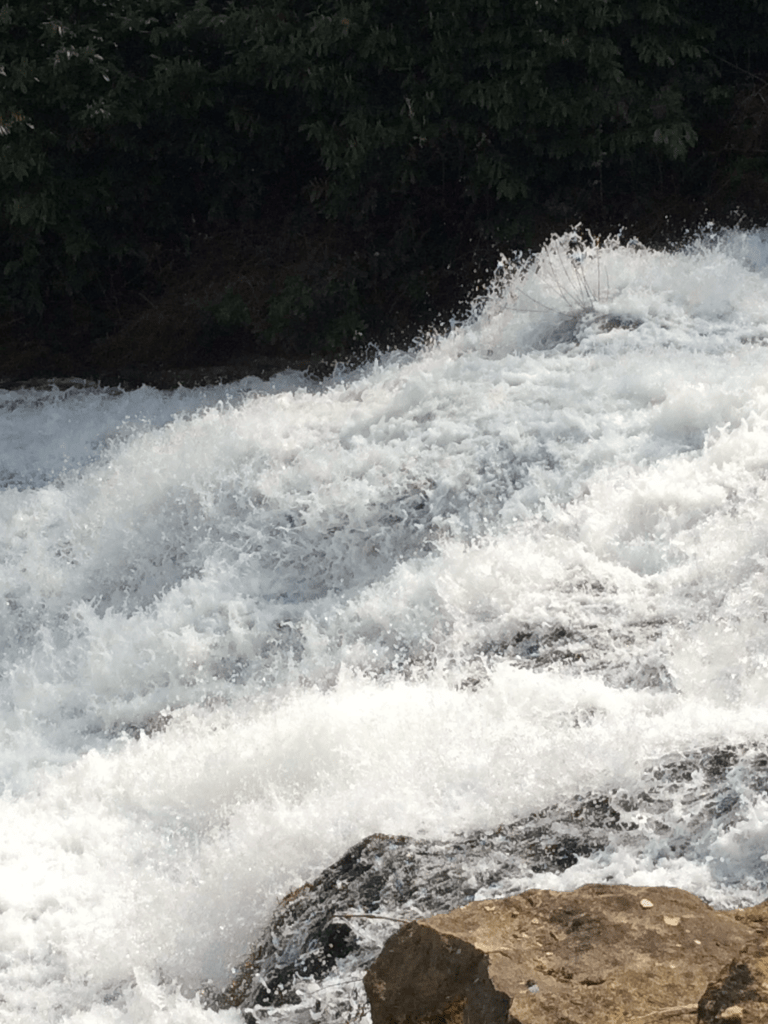
A waterfall in nature. The cascade at Blenheim. The flow of water in a cascade is usually over rocks and different to the fall of a cataract.
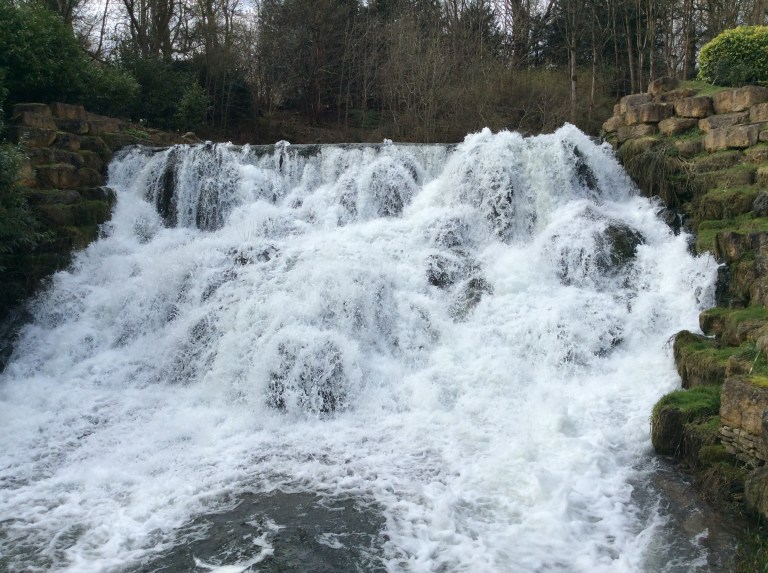
This cascade is man-made and designed by Capability Brown.
 anita21718